
I Will Be Finked If I Go To Dance Classes
An exercise in persuasion

In Harriet the Spy, a book about an eleven-year-old who spies on the neighbors as an exercise in Holmesian observation, Harriet and her best friend are definitely not persuaded by their mothers to go to dancing school. (or to take dancing lessons; it’s not clear. Part of the magic of that book is how the author gives a very accurate account of how an 11 year old’s mind works.)
The first time she and her friend talk together about the issue, it’s clear there’s no real reason they don’t want to go to dancing school. Janie says, “As for me, I couldn’t care less if I learned to dance. I’ve got a big picture of Newton learning on the Charleston [river].”
(You see, there are no reasons given here.)
Later, Harriet stands up at the dinner table and screams “I WILL BE DAMNED IF I GO TO DANCING SCHOOL.” When her nanny asks her about it, Harriet finds she doesn’t even have a reason.
“Harriet thought a minute. The other reasons weren’t really it. It was that the thought of being in dancing school somehow made her feel undignified. Finally she had it. “Spies don’t go to dancing school,” she said triumphantly.”
All of which is to say, Harriet and her friend never had a reason not to go to dancing school. They just had an extremely bad feeling about it.
In Never Split the Difference, an important book about negotiation, a chapter is titled “Heart vs Mind”. He says, after outlining some history of negotiation where the solution has always been rational problem solving, “…Have you ever tried to devise a mutually beneficial win-win solution with a guy who thinks he’s the messiah?”
After many failures using negotiation tactics that involved rationality, they decided that “Emotions and emotional intelligence would have to be central to effective negotiation, not things to be overcome.”
There’s almost never a situation where using some reasons will persuade someone to believe something they don’t want to. A statement of fact will not persuade a toddler to put his pajamas on, anyone who’s dealt with children knows that. A statement of fact probably won’t even persuade your teenager. (“Screens hurt your eyes… but Mommmm!”) A statement of fact won’t even persuade a smart adult. (“Gun violence is statistically rare… I don’t care, I don’t want to be a victim.”)
If you’ve argued with someone from another religion/sect of Christianity and have been definitely definitely right, but the other person remained unpersuaded, you know this too. The problem is getting to their heart. Nobody will listen to you otherwise.
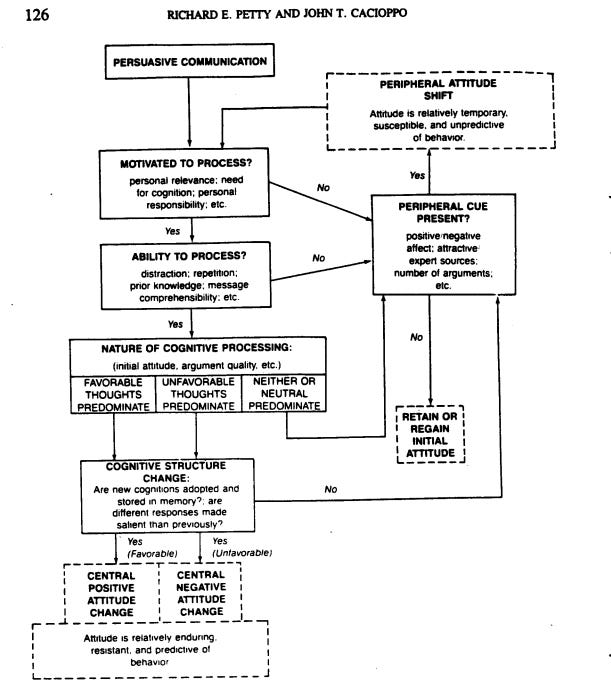
I took this flowchart from this interesting paper.
You can see what I’m saying in it. If the person goes into the persuasion attempt zone (a YouTube ad, a conversation with you, a demand from their parents) unmotivated to process, they just won’t listen.
IF they even decide to listen, and they can understand you, they will probably still not be persuaded if they don’t want to be. Initial attitude is the first variable they list. If you didn’t want your mind to be changed, it won’t be.

This be can part of a stupid ad or a motivational article, depending on whether you want to be motivated or not.
Clearly, getting someone’s feelings is the only way you can persuade them. I don’t know how though. I would suggest reading Never Split the Difference for more advice.
Dedicated to Tyson in hopes he will find a way to convince *his* mom
Great insight, "If you didn’t want your mind to be changed, it won’t be." I'm going to remember that line.